





Overselling is one of those retail problems that seems minor until it happens repeatedly.
One order is accepted that cannot be fulfilled. One customer pays online for an item that a branch already sold twenty minutes earlier. One COD order holds stock that never actually ships. One promotional weekend creates a backlog of apologies, cancellations, and stock adjustments.
Each individual case looks manageable.
Together, they damage customer trust, create staff stress, and make the inventory system feel unreliable.
This problem gets worse during the exact moments when retailers most want the business to run smoothly: big campaigns, COD-heavy peaks, and busy walk-in billing hours.
That is because overselling is not only a stock-count problem. It is a timing problem, a branch-visibility problem, and a workflow problem.
Why overselling happens more in connected retail
A retailer selling only from one physical store has fewer ways to get inventory wrong.
The moment that same retailer starts selling through Shopify, physical branches, warehouse stock, COD orders, and branch fulfillment, stock begins moving through multiple channels at once.
That creates a new question the business has to answer constantly:
How much stock is actually safe to sell right now.
That question is harder than it looks.
Total stock is not the same as sellable stock. A product may exist somewhere in the business, but not in the branch that needs it. A unit may be part of a pending transfer. Another may be reserved by an order that is not yet operationally confirmed. Another may already be packed for dispatch.
Overselling usually starts when the system or the team treats all stock as equally available.
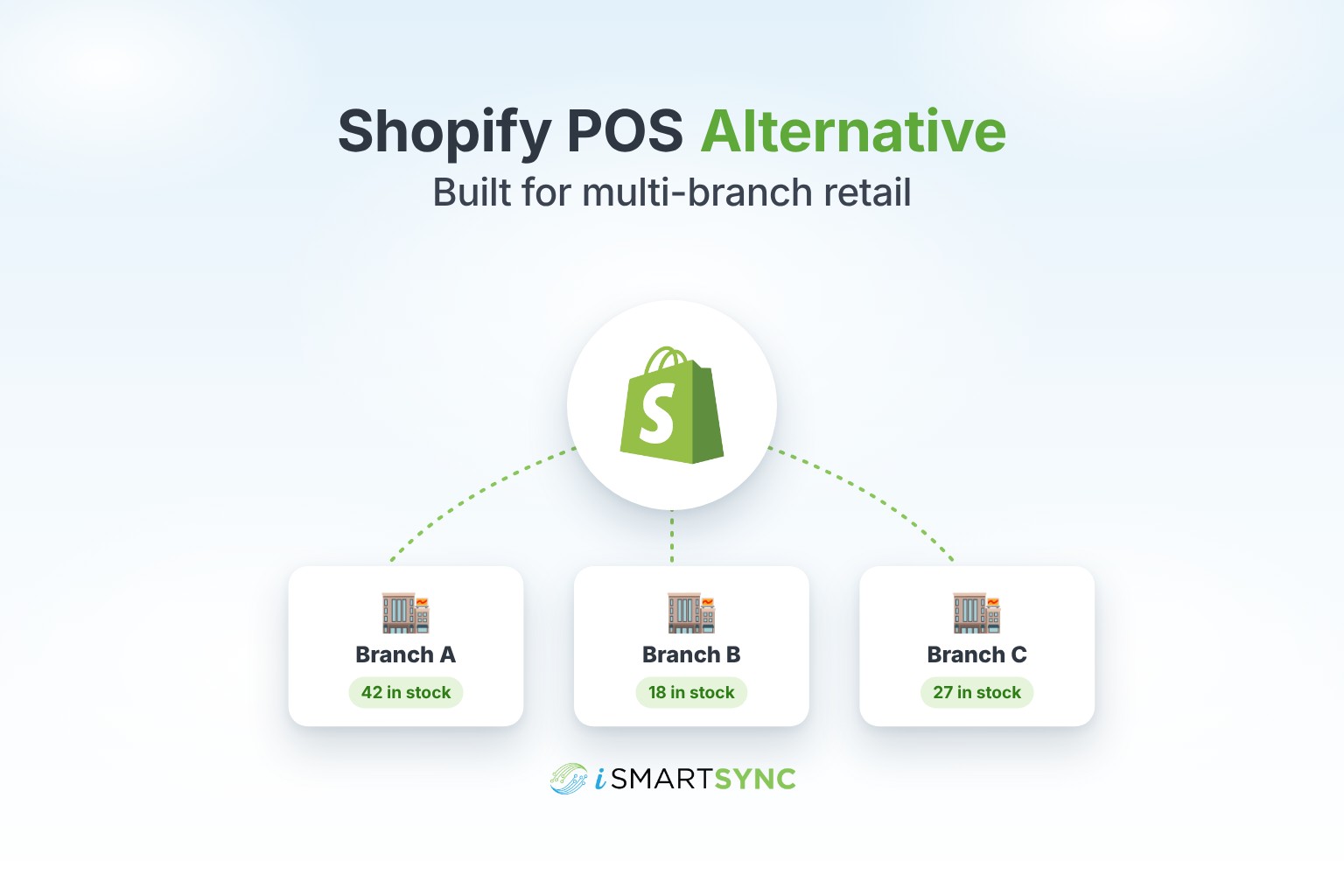
This is why retailers need stronger multi-branch inventory and order management, not just a flat inventory total.
The three moments when overselling risk spikes
Some periods are more dangerous than others.
Sales campaigns
Traffic jumps quickly. Both online and in-store teams move faster. Customers buy fast-moving sizes and colors in clusters. A delay of even a few minutes becomes expensive.
COD peaks
COD creates a special kind of risk because many systems reduce stock when the order is created rather than when the item physically leaves the branch. That can distort availability before the business has actually committed stock to a real dispatch.
Walk-in billing rush
Busy branches can sell through key SKUs quickly. If the online channel is not updated immediately, Shopify may continue showing units that the branch no longer has.
These three moments are different on the surface, but they are connected by the same issue: the business is making sales decisions faster than its inventory workflow can safely support.
Why total stock is not enough
A product may show fifteen units in the business overall.
That sounds healthy until you break it down.
- five units are in a warehouse
- three are in one branch with high local demand
- two are already packed for dispatch
- one is part of a pending transfer
- two are tied to unresolved return processing
- two are available in another branch far from the customer
The total is still fifteen.
The immediately sellable quantity for a specific order may be far lower.
This is why overselling often happens in businesses that technically "had stock." They had stock somewhere in some form, but not the right stock in the right branch at the right moment.
That is the operational value of multi-location inventory management. The business needs visibility into usable stock by location, not only a global number.
Why COD can make overselling worse instead of better
Many retailers assume COD is safer because payment is not yet confirmed. In reality, COD creates a unique inventory trap when the system is not designed around physical stock movement.
If a COD order reduces stock at the moment of order placement, the business may appear to have less inventory than it really does. That can cause false stockouts.
At the same time, if the same operational logic is not handled carefully, the business may over-commit stock elsewhere because the order has not yet been physically assigned, packed, and dispatched from a branch.
This is why COD-heavy retail in Pakistan needs a different inventory mindset than prepaid ecommerce in other markets.
The safer rule is simple: stock should change when goods move, not when a customer expresses intent.
That principle reduces both overselling and unnecessary stock locking.
It is also why Pakistani retailers dealing with COD at scale need workflows closer to shopify order fulfillment through POS rather than relying only on default ecommerce status behavior.
Common operational mistakes that lead to overselling
The same breakdowns show up repeatedly.