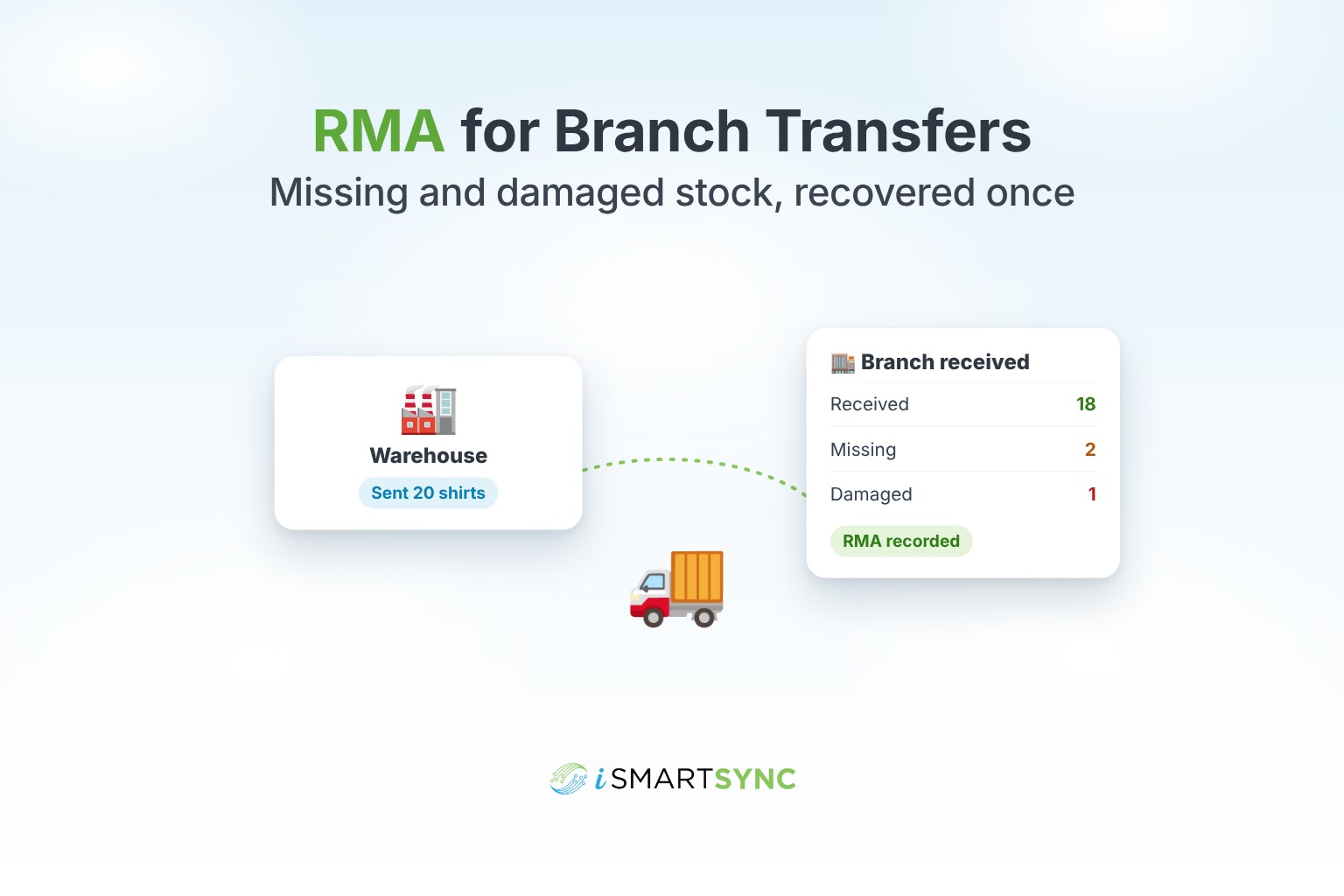
You send 20 shirts from the warehouse to a branch. The branch receives 18, and one of those is torn. What happens to the other three?
In many shops the answer is: nothing. The branch receives 18, the warehouse already sent 20, and two shirts disappear from your records. The torn one sits on a shelf as sellable stock. A month later the stock count is off and nobody remembers why.
An RMA record stops that from happening.
What RMA means in retail
RMA stands for Return Merchandise Authorization. In online selling it usually means a customer return. In multi-branch retail it is just as useful for transfer problems: items that were sent but didn't arrive, or arrived damaged.
The idea is simple. Instead of losing the difference, you record it, decide what to do with it, and recover the stock exactly once.
What a good RMA record holds
- The product and variant, for example a blue shirt in size M
- The transfer it came from
- Quantity missing and quantity damaged
- Status: open, recovered or written off
- Who created it and when
The process, step by step
- Send the transfer. Stock leaves the sending branch and is in transit.
- Receive and count. The receiving branch enters what arrived, item by item.
- Record the difference. Missing and damaged quantities go into an RMA record instead of vanishing.
- Investigate. Was it left in the van? Packed in the wrong box? Damaged by the courier?
- Recover or write off. If the items are found, recover them back into stock. If not, write them off so your counts are honest.
- Lock the record. Once stock is recovered, the record can't be edited, so the same items are never restocked twice.
Why locking matters
Double restocking is the most common RMA mistake. Someone recovers the missing shirts, someone else does it again, and your system now shows stock you don't have. A locked record after recovery makes that impossible.
Keep your online store right too
If you sell on Shopify, missing stock affects what customers can buy online. When stock is recovered, your Shopify quantity should update as well, so you don't oversell or hide items you actually have. For more on keeping both sides aligned, read why stock mismatches happen between Shopify and physical stores.
Habits that cut transfer losses
- Count at both ends, sending and receiving.
- Receive item by item, not by box.
- Check RMA records every week, as part of your weekly stock movement review.
- Look for patterns: the same route, the same branch or the same product going missing.
How iSmartSync does it
iSmartSync creates RMA records per variant during transfers and returns. Each record holds the variant, transfer reference, missing and faulty quantities and recovery status, and it locks after stock is returned to prevent double restocking. Recoveries can also restore Shopify stock where it applies.
See how RMA management works, or book a 30-minute branch workflow demo to walk through a transfer with your own branches.
Common questions
Is RMA only for customer returns? No. In retail it is very useful for transfer differences between branches, and it also covers returns.
What if missing items turn up later? Recover them from the RMA record. They go back into stock once, and the record locks.
Can I edit an RMA record after recovery? No. Locking it prevents the same items being restocked twice.
Does RMA change my Shopify stock? Recoveries can restore Shopify stock where it applies, so your online store stays correct.